MATTHEW BRIGHT
  • Home
  • Writer
    • Short Fiction
    • Between The Lines
    • Stories To Sing In The Dark
    • Between The Lines
  • Editor
    • The Myriad Carnival
    • Threesome
    • Clockwork Cairo
    • Gents
  • Design
    • Inkspiral Design
    • 20 Minute Design Challenge
  • MIsc.
    • 20 Minute Design Challenge
    • Essays >
      • 'Participation'
    • Reviews
    • Advent Calendar 16: Short Story Re-Reads
    • Advent Calendar 15: Novel Re-Reads
  • Contact

ADVENT CALENDAR '16 / DEC 24TH: A LOT OF MINCE PIES / ROBERT SWINDELLS

6/17/2017

0 Comments

 
It’s back! The blog advent calendar. I enjoyed last year’s blog theme last year—re-reading twenty-four books of my youth—so much, so this year I’m applying the same approach to short stories, trawling through a myriad bunch of collections and anthologies I’ve read in the last few years.

Picture
December 24th:
A Lot Of Mince Pies by Robert Swindells


Tell me about your first time:
 I was an enterprising child, and one Christmas, aged – I think – eight years old, I decided to make a book. I think this was the year after I’d been given a ‘make your own newspaper’ kit, and my ambition had expanded, along with my equipment; I now owned a word processor, and our house had a photocopier. I could also, if asked, spell the word precocious perfectly.

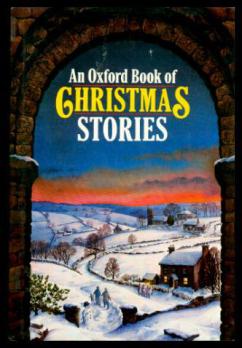
It was to be a Christmas book I decided, and so I set to collating the contents. Carols, and other bits and pieces. And a story. Heedless to copyright law, I got a book of Christmas stories from the library and decided to copy one of them. (When I was searching for this story I was convinced it was a Point Horror collection, but the only listing for this story’s publication I can find is the Oxford Book of Christmas Stories; that cover does look familiar.) The one flaw in my budding career as an editor was that I neglected to read the story beforehand, (presumably basing my choice entirely on the fairly homely sounding title), and so, as I tapped away at my word processor, I became more and more aware as I continued that perhaps this story wasn’t quite going to be appropriate for my conservative Christian family.

And so, round about the line ‘a lot of sharp teeth’ I stopped writing. I wasn’t entirely certain, at eight years old, that I fully understood what was happening at the end of the story, but I do remember being thoroughly discomfited by it. I’m not sure if I finished the story; if you’d asked me before I re-read then I couldn’t tell you what happened afterwards. But there’s something powerful about still remembering an image from something you read as a child years later, and that moment – the mouth full of sharp teeth – is one of them.

I don’t think I ever actually made the book in the end (though it’s odd isn’t it? Eight years old and already *I* was censoring their reading, and not the other way around.) But I do remember that afterwards I tried to write my own Christmas horror story, though I don’t remember much about what it involved other than a river and some snow. But that seems like a perfectly good start…

Sum it up:
 The final house of the carol-singing round harbours a dark secret…

Give me a quote:
 “His lips parted, and I saw why he couldn’t talk. His mouth was crammed with spikes. As soon as I saw that mouth I knew what he was, but by then it was too late.”

Second reading:
 I did worry that if I came back to this story then I’d find it simplistic, prosaic, childish; I thought I’d read it and wonder what I’d been so scared of when I was a kid. But no: this story is still creepy as hell, it turns out. Of course, what’s happening is much clearer to an adult reader than a young child reader (the story never actually says the word vampire, but that’s its only nod to ambiguity) but it’s evocative even in its simplicity, and I found myself completely engrossed.

(Though, slightly jarring, perhaps specifically to my ears, were two lines: ‘I’m a boy. Boys don’t kiss boys’ and ‘He was beautiful. I know that’s a weird word to use about a boy.’ I couldn’t decide how I felt about their presence in the story; you could take it as characterisation, or you could take it as authorial assumption of social values. The story is thirty years old though, so I guess I should be forgiving. Mind you, it did amuse me that it was the vampire teeth, and not the whole boys-kissing-boys bit that made me decide it was inappropriate for my family to read.)

Where can I read it:
 I’m slightly unclear what book you can find it in, but you can hear it as part of the Night With A Vampire radio series, narrated brilliantly by David Tennant. This isn’t the official place, but some dodgy soul has uploaded it to youtube here.
0 Comments

ADVENT CALENDAR '16 / DEC 23Rd: CHILDREN OF THE NIGHT / KRISTINE KATHRYN RUSCH

6/17/2017

0 Comments

 
It’s back! The blog advent calendar. I enjoyed last year’s blog theme last year—re-reading twenty-four books of my youth—so much, so this year I’m applying the same approach to short stories, trawling through a myriad bunch of collections and anthologies I’ve read in the last few years.

Picture
BUY CHILDREN OF THE NIGHT
VISIST KRISTINE KATHRYN RUSCH
December 23rd:
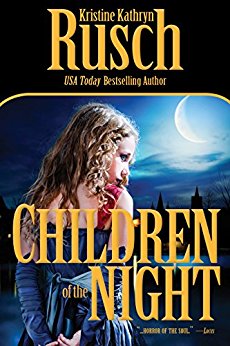
Children of the Night by Kristine Kathryn Rusch


Tell me about your first time:
 I liked Star Wars when I was young. Really liked. I collected all the books, which were usually written by names from the science fiction and fantasy world, and so when I saw their names pop up elsewhere, I read their stuff. Which I presume is how I came to read ‘Children of the Night’, recognising Rusch’s name from her novel The New Rebellion.

I was probably about eleven. I was used to safe, easy stories, even if they were nominally ‘horror’. If I read about vampires, it was in schlocky, pulp, kid- or teen-friendly stories. I remember reading ‘Children of the Night’ and being totally freaked out. It felt grimy, and realistic, and complex in a way I didn’t really know how to understand. Long afterwards I remembered two things about it. The first: the visceral horror of the children who are raised by vampires, only to have their ‘parents’ murdered. The central idea of the story – that vampires might also care for their charges – I found uniquely disturbing; I’d not encountered this kind of ambiguous storytelling before, and it was perhaps the first thing I read that took horror from the everyday-within-the-monstrous, rather than from melodramatic pantomime.

The second was something about words: a brother and a sister who remember that, when they were young, certain words were imbued with psychological meaning, so that they thought of them as dirty or powerful, when they were insignificant to anyone else. I found this idea profoundly fascinating, carrying overtones of seduction, sexuality and power before I was old enough to put a vocabulary to those sorts of things.

Sum it up: 
Cammie works for a vampire rehabilitation centre, though there’s not much rehabilitating going on,  and when she carries out an eradication on a vampire who has a small child, it brings up dark memories…

Second reading:
 It took me ages to figure out what this story was. I was certain I remembered the author, and was convinced I’d read the story in an anthology of vampire stories, but when I searched through the publishing history I could find no record of the anthology. Eventually I ran across Sins of the Blood, a novel, and realised that the plot was very similar to what I remembered, and from there discovered that the short story ‘Children of the Night’ re-appears as part of Sins of the Blood, and so I reasoned this must be the story.

And indeed it seems it was, for the first part of what I remembered was right there: the children of the vampires, and the uncomfortable exploration of the monster as parent. I thought that perhaps, with eighteen years of further reading under my belt, I might discover that the story was less complex than I’d imagine, but it still retains a discomfiting sense of atmosphere even if I am no longer taken by surprise by the grey shades of characterisation of the vampires.

But of the second thing I remembered – the words given power – there was no sign, and so I still don’t know where that came from. Perhaps from another story in the collection, which in my childhood memory I have conflated, or perhaps from somewhere else entirely. It remains frustratingly elusive, and if anyone has any hint as to where I might look to find it, please let me know.

Where can I read it:
 The short story ‘Children of the Night’ is available on Amazon as an ebook.
0 Comments

ADVENT CALENDAR '16 / DEC 22ND: nails / paul jennings

6/17/2017

1 Comment

 
It’s back! The blog advent calendar. I enjoyed last year’s blog theme last year—re-reading twenty-four books of my youth—so much, so this year I’m applying the same approach to short stories, trawling through a myriad bunch of collections and anthologies I’ve read in the last few years.

Picture
December 22nd:
Nails by Paul Jennings


Tell me about your first time: When I compiled my list of what I wanted to re-read for this blog, it started me thinking back to stories I read as a child. There were three I wanted to track down because there was something in each of them – a single moment, a vivid image – that I found incredibly potent, and above all: memorable. I couldn’t remember much else about the stories, but there was something specific that still jumped immediately to mind as an adult. The other two are coming in the next two posts, but today’s is the story Nails by Paul Jennings.

Here’s what I remembered: a boy on an island with his father, begins to grow nails all over his body, and eventually realises it is because he is becoming a merman. I believe there was something about his age that caused it (overtones of puberty-metaphor, I guess?) and I remember being totally taken aback by the reveal that what was actually happening to him. But chiefly what stuck with me was those nails: that image was burned into my memory. The story creeped me the hell out; judging by the cover and the age-group I’d say this story probably wasn’t/isn’t a horror story, but I read it like one.

Second reading: I’m a completist, so you have no idea how much this bugs me but… I didn’t manage to re-read this. I didn’t figure out what the story was until the eleventh hour, with not enough time to get hold of the book. But wait! It also turns out that the story was adapted into an episode of the Australian children’s TV show Round The Twist. And so I watched that instead.

Firstly: clearly the original story is folded into an ongoing format of the show that I know nothing about. I don’t know who any of the kids are, and I definitely have no idea who the random ghosts on the staircase are. It’s highly entertaining, though – and I’m tempted to watch the whole series – but it didn’t feel like the story I remember at all.

In the second half, the episode becomes properly about the boy with the fingernails, and there I can see the backbone of the story I recall. But there’s something different about the atmosphere; I remember the boy was isolated, scared, and the story was wild and unsettling; I can’t tell, from watching this show, whether I am simply misremembering the atmosphere of the story, but certainly glittery rainbow didn’t do anything to creep me out this time around. (That said, my old mucker over at A Pile Of Leaves described seeing that scene in the episode as ‘unnerving him from head to toe’ so perhaps what I am simply missing here is the sense of resonance from having experienced the television version as a child. It seems he remembers the episode with the same feelings that I remember the story.)

Consider me still intrigued; I’ve ordered the book, so I shall report back in the new year when I’ve re-read the original story I remember.

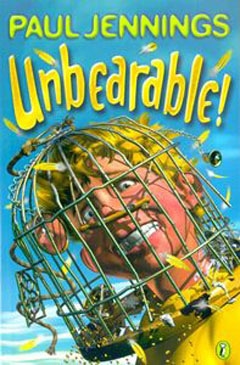
Where can I read it: In Paul Jennings’ Unbearable. The Round The Twist episode is here:
1 Comment

ADVENT CALENDAR '16 / DEC 21ST: GUTS / CHUCK PALAHNIUK

6/17/2017

0 Comments

 
It’s back! The blog advent calendar. I enjoyed last year’s blog theme last year—re-reading twenty-four books of my youth—so much, so this year I’m applying the same approach to short stories, trawling through a myriad bunch of collections and anthologies I’ve read in the last few years.

Picture
READ THE STORY
VISIT CHUCK PALAHNIUK
December 21st:
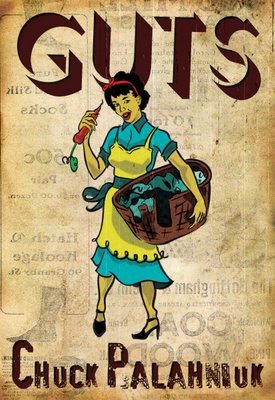
Guts by Chuck Palahniuk


Tell me about your first time:
 This story – this bloody story – got me suspended from school internet for three days.

Context: my family are weird, and so we didn’t have the internet. Literally my only access to the internet was at school (and later sixth form college). Can you imagine the only pornography you having access to is the thumbnails of a cached google image search (because they weren’t blocked, in case you’re wondering). (Plus you had to save them to floppy disc, which took ages, all while really hoping that no teachers wandered by, or basically anybody you knew.) So, getting banned put quite a crimp in my sex life.

Worse, when you got banned you had to go see the IT technicians all the way down at the computer hub, and ask why you were banned. Which meant a heart-palpitating walk of terror, imagining all the dodgy things it might be.

Turns out, it was Guts.

See, Guts did the rounds of our student email, like the dirty bits from paperbacks that people talk about sharing around the playground.* It was that for the digital age. I can’t really remember what we understood the story to be – we definitely knew it was fiction, because all of us geeks in the Film Studies class knew exactly who Chuck Palahniuk was (i.e. he wrote the Fight Club novel and obviously nothing else of worth ever, because they hadn’t adapted anything else into a film, and we were sixteen, and that was how you worked out if a book was worth anything**) but the jury was still out on whether this was a true story, somehow. It had that quality of urban legends. And so it circulated, within the school, until I made the mistake of trying to send it outside the school, and it got flagged for obscene content.

It was embarrassing, but only like halfway down the list of embarrassing things it could have been. The technicians presented me with a printout, made me stammer an apology, and then banned me for three days as a punishment. No doubt they were secretly highly entertained; it was probably one of them started the chain in the first place.***

(Mind you, Guts is where I also learned the phrase ‘esprit de l’escalier’. Because, y’know, culture.)

Sum it up:
 I actually don’t think I should. I think you should read it. But if this whets your appetite: this story is infamous for causing people to faint during readings.

Give me a quote:
 [Because contextless, this will mean nothing, and to everyone else…] “If I told you how it tasted, you would never, ever again eat calamari.”

Second reading:
 I’m the internet generation. We’ve seen everything. We were raised on Meatspin. We’ve seen Tubgirl and the Pain Olympics. I mean, how bad can it be?

Okay, so not that bad. I didn’t faint. But trust me when I say: this is still one hell of a visceral story, a healthy fistful of body horror with a nice sideline in sexual perversion. What I found absolutely fascinating on re-reading it is how much other stuff is in this story that I totally missed. I mean: how, aged, sixteen, did I not remember that this story also featured pegging, sounding, and autoerotic asphyxiation? All I remembered was the killer ending, and none of the shopping list of fucked-up-shit-to-google that preceded it.

Actually, it would be really easy to dismiss this story as basically teenage horror-porn that overloads on gross-out as a way of manipulating its reader – the fictional equivalent of Two Girls, One Cup – but that’s very reductive. For a start, you can make an argument that there’s a very sharp line of satire running through this about sexuality and youth, of the quest for the ever-more extreme, though it doesn’t present that with any sense of moral judgement or preachiness. In fact, it’s brazen, bordering on nostalgic, in its depiction of teenage experimentation: sure, go ahead, do what you want, you could imagine its saying, just be careful not to get your intestines sucked out through your arsehole. And to this day, I don’t think I’ve ever read anything else that manages to so well evoke the internet generation’s treatment of the body and sex as both arousing and morbid, the idea that something sexually perverse is both furtive and, in sharing it, a social bonding mechanism. In this way, the sharing of Guts on our student email, and the famous live readings of this story continue this thread: here, you are invited to be utterly revolted by this story, and yet you are also completely submitting yourself to hearing it, and bonding with others over your shared disgust.

And secondly, the Invisible Carrot metaphor is brilliant, and if something has a metaphor in it then it must clearly be Literature with a capital L. Which means I can probably tell my mother that my school once banned me for sharing Literature, and thus not be disowned.****

Where can I read it:
 Online, here.

* The only actual example of this in my era was when we all got really excited over a Shaun Hutson novel that said the phrase ‘moist cunt’.
** If you’d told me when I was sixteen that one day a story of mine would appear in the same Table of Contents as Chuck Palahniuk, I’d never have believed you, but once I did, I would probably have asked, ‘So is anyone making it into a film?’
*** Further to this, Chuck Palahniuk and Guts later featured in a minor act of rebellion a year or so later, when I absconded – shock-horror-but-no-seriously-it-was-a-big-deal-in-context – from church one morning, went into the city and bought books. One of those was Haunted, which includes Guts. The book disturbed the living hell out of me, and left me with little memory of it other than complete incomprehension and a vague image of homeless people shagging then killing each other.
**** According to Wikipedia, a New York City public school 11th grade teacher was suspended for letting his English class read ‘Guts’. I’m still deciding if that man was a hero or a fool.
0 Comments

ADVENT CALENDAR '16 / DEC 20TH: STARBUCKS BOY / DAVID LEVITHAN

6/17/2017

0 Comments

 
It’s back! The blog advent calendar. I enjoyed last year’s blog theme last year—re-reading twenty-four books of my youth—so much, so this year I’m applying the same approach to short stories, trawling through a myriad bunch of collections and anthologies I’ve read in the last few years.

Picture
VISIT DAVID LEVITHAN
December 20th:
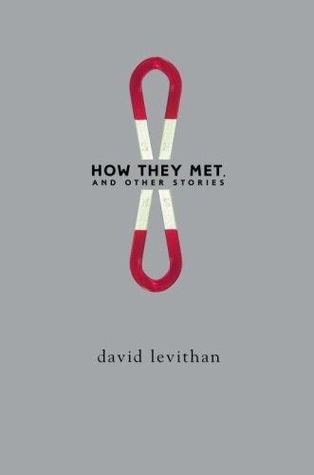
Starbucks Boy by David Levithan


Tell me about your first time:
 If you asked me, I’d normally tell you I discovered David Levithan just a little too late. I’m not even sure how I discovered him (my best guess would be a list of ‘essential gay reading’) but I know how old I was: eighteen, in my first year of university. I didn’t have the smoothest ride of adolescence, at least from the point of view of coming to terms with being gay, and coming out. The two years after turning sixteen were complicated and confusing, but by the time I’d gone off to university, all that was behind me. I embraced my sexuality, and my new identity, and I did my own thing.

And I read a lot. The first Levithan I read was Boy Meets Boy, and it’s great, but also quite caught up in the trappings of American schooling, and so it never quite resonated with me in a personal way. Then I read How They Met and fell in love with the book; on a list of my ten favourite books ever (written aged eighteen), this was near the top. (I can prove it: it’s still on my defunct myspace page, because I was that era, just.) It’s full of characters that feel real, complex and often flawed, but always with an eye on the romance. Not the slushy, sweeping romance that dominates charts, but awkward, tentative, celebratory human romance; again: real, complex and often flawed. And also, predominantly gay. Which was wonderful to read, and to be able to recognise parts of myself in their stories and their interactions. I remember thinking: I wish I’d found this two, three, four years ago, when it would have done me some good.

Sum it up:
 The book is a collection of ‘meetings’ – couples meeting in a variety of ways. Some are meetcutes, and some are a touch sharper round the edges. Some are moments in time, and some run the length of the whole person’s life. I re-read the entire book (though I only meant to read one story, the first, ‘Starbucks Boy’, in which a youth is unknowingly fixed up with the cute boy at Starbucks by the precocious six-year-old girl he is babysitting.)

Give me a quote:
 “Only in New York (and maybe San Francisco) could a six-year-old have gaydar.” (There are numerous much more extensive quotes I’ve picked, but I chose this one because, before I even picked up the book to re-read it, I could have quoted that line at you. It made me laugh uproariously the first time I read it.)

Second reading:
 Ok, first off, to the business of this blog: ‘Starbucks Boy’ is hilarious. I remembered it being sweet and quite funny, but I was giggling away to myself reading it this time. The building flirtation between the narrator and Starbucks Boy is helped along by the girl, Arabella, who has locked herself in the Starbucks toilet and is gleefully prodding things along from within. It’s absolutely deadpan, very funny, and is crying out for a short film adaptation. And that’s where I meant to stop reading (otherwise I’d never finish this blog every day) but instead I carried on, and re-read the rest of the book.

Perhaps like one of his characters, I thought I knew it all when I was eighteen. The complex bit of being a teenager was over, and now I was an adult. I know what love felt like, and I knew how it all worked. Simple. Reading a book of stories about gay kids meeting, about gay kids falling in love, it was nice, but I didn’t need it to feel okay about myself. I already felt okay; I’d got this whole thing sorted out in my head. Re-reading How They Met I found myself remembering this eighteen-year-old version of me and thinking… what an idiot. Of course you had no idea, of course you were still making it up as you went along. And more importantly: of course you needed this book, and books like it. You always did, you always will.

So really, thank god for David Levithan, and all the other authors writing stories about gay kids meeting and falling in love. Those stories are as essential now at twenty-eight as they were at eighteen, and sixteen, and thirteen, and ten, and… well. You get it, I’m sure.

​Where can I read it:
 In How They Met and Other Stories.
0 Comments

ADVENT CALENDAR '16 / DEC 19TH: BANG CRUNCH / NEIL SMITH

6/17/2017

0 Comments

 
It’s back! The blog advent calendar. I enjoyed last year’s blog theme last year—re-reading twenty-four books of my youth—so much, so this year I’m applying the same approach to short stories, trawling through a myriad bunch of collections and anthologies I’ve read in the last few years.

Picture
December 19th:
Bang Crunch by Neil Smith


Tell me about your first time:
 I discovered Neil Smith the same weekend I discovered Postsecret, and I discovered them both in the same place: a Waterstones in London, as a whiled away a spare afternoon on one of my thrice-yearly visits. I bought Postsecret and I Bang Crunch and ended up reading them both in the grounds of the palace. I got badly sunburnt, but they were worth it.

Sum it up:
 A girl ages at multiple times the normal rate, living her entire life in a few short years (bang), before contracting back once again to infancy (crunch).

Give me a quote:
 “You are Eepie Carpetrod. You’re eight years old and attend Albert Einstein Elementary, and you’re a perfectly normal girl, at least till that day in Mrs. Mendelwort’s class when you draw a multi-coloured crayon creature that has a yellow face with buggy eyes and a pug nose, a hat sprouting a garden-hose valve, an armless blue rectangle of a chest, thimbles for breasts, shapely red legs bent at the knees, and feet jammed into high heels. Very Joan Miro, Mrs. Mendelworth says. Her knowledge of surrealism is bang on but her pronunciation is off and so you correct her, zho-an mee-ro, you say, and you tell her that Miro preferred the Catalan pronunciation and then glance down at your reproduction of Miro’s Fleeing Young Girl and up at your teacher, whose mouth mirrors your creature’s mouth, crumpled surprise.”

Second reading:
 First I re-read the single story I was planning on for this blog and then, caught, I I re-read the entire. It’s a really solid collection of stories; the game at hand is plucking quiet, vulnerable moments from narratives slightly off-kilter to the usual seams of story mined for drama (the experience of those diagnosed with benign tumours, for example, or a story narrated by gloves), often fusing them through a lens of the visually fantastical. The story I remembered the most, and on second reading I believe remains the strongest of the collection, is the eponymous ‘Bang Crunch’, which tells the life story of a girl who ages at a preternatural rate. It is one long, breathless flurry, conjuring poignancy from the most prosaic of details, rich and odd, and ultimately both sad and moving. A short, expert sliver of storytelling that I loved very much.

​Where can I read it:
 In Bang Crunch (Orion Books).
0 Comments

ADVENT CALENDAR '16 / DEC 18TH: THE CASE OF THE PIPE DREAM / CHANTELLE MESSIER

6/17/2017

0 Comments

 
It’s back! The blog advent calendar. I enjoyed last year’s blog theme last year—re-reading twenty-four books of my youth—so much, so this year I’m applying the same approach to short stories, trawling through a myriad bunch of collections and anthologies I’ve read in the last few years.

Picture
BUY TALES OF THE GREAT DETECTIVES FROM OBVERSE
READ MY FULL REVIEW OF TALES OF THE GREAT DETECTIVES
December 18th:
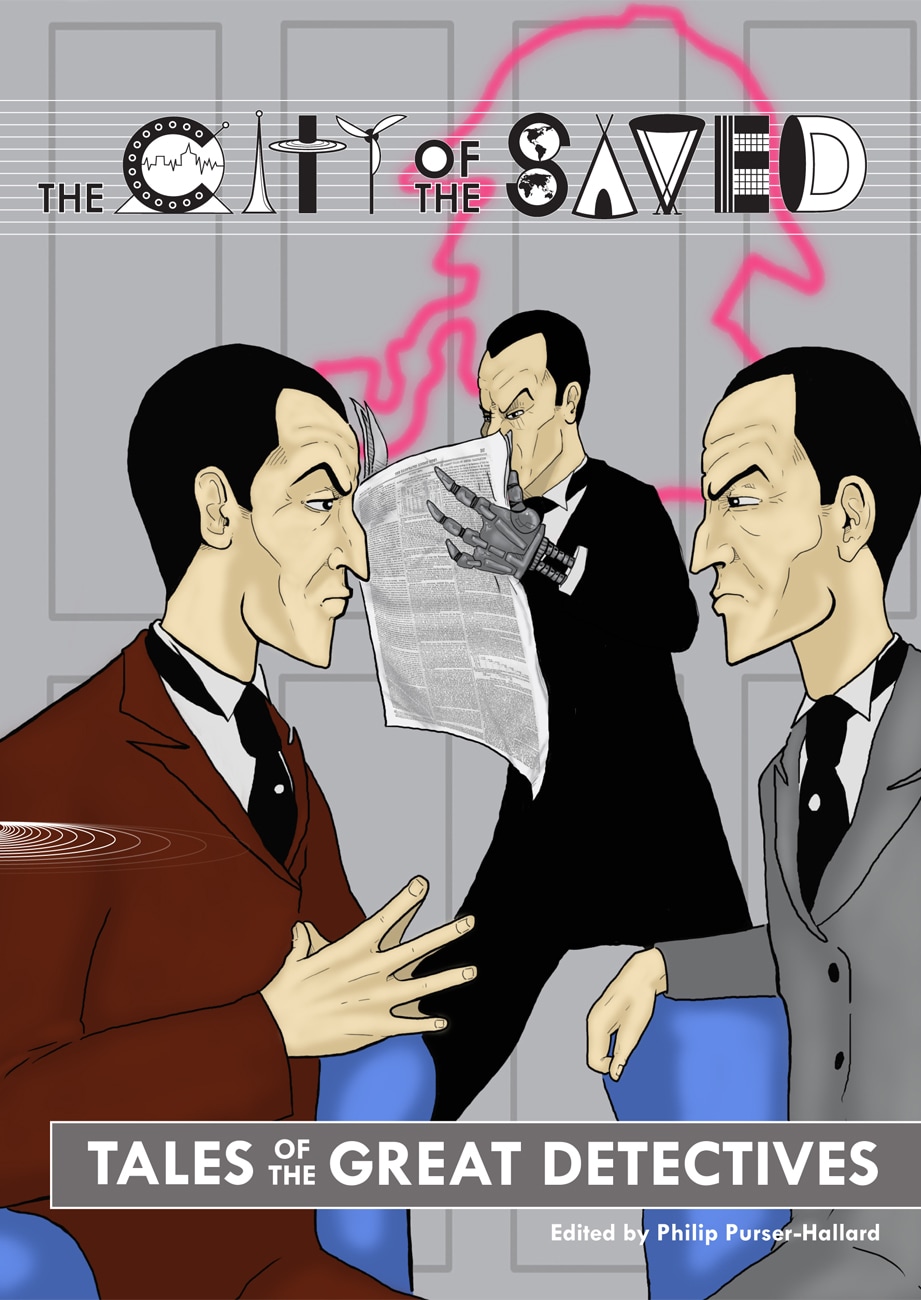
​The Case of the Pipe Dream by Chantelle Messier


Tell me about your first time: Obverse’s Tales of the Great Detectives may well be my favourite non-canon Holmes book ever. I don’t say that lightly either; I’ve read a shit-ton of them. It’s genius from start to finish. It takes place in the City of the Saved (which ties to the Faction Paradox world, a fandom I know zero about, so I couldn’t comment on that aspect; it’s immaterial to the book though) in which all possible fictional versions of Holmes and Watson exist together, in one Agency. And thus you could have, for example, a cartoon animal Holmes paired with a Victorian Watson, or any other combination you can conceive of (including Young Sherlock Holmes, who shows up in the first story in the collection.)

I should emphasise that when I chose ‘The Case of the Pipe Dream’, although I chose it because it’s my favourite in the book, it’s a close thing. Honestly: you really should just go buy this book right now, because I can’t speak highly enough of it.

Sum it up: A Doyle-format Watson is dispatched to find a ‘broken’ Holmes – one based on a shonky 40s radio serial version – and in doing so uncovers a dastardly plot of literary proportions…

Give me a quote: “At the top where it must connect into the mysterious corporate building, the pipe walls give way to a maze of smaller outlets and pressurized water emitted. The sensation of narrative direction is overpowering, and I feel oddly compelled to ask foolish questions and look for fingerprints through magnifying glass. I even fancy I feel my old war wound throb. Meanwhile, Holmes is singing a jingle for a Labour Day sales even in between conducting a stern interrogation of his left shoe. ‘We’ve got to get out of this thing,’ I mutter, ‘before we both devolve into fictional stereotypes.'”

Second reading: God, there is just so much to love about this story. The whole of the book, given its premise, is brilliantly meta, but ‘The Case of the Pipe Dream’ is meta-on-toast. Without giving too much away, the plot turns on the idea that something is causing everyone to start acting a good deal more fictional, (and thus the ‘broken’ Holmes, who is jolly, full of plot-holes and prone to spontaneous advertising, is merely infected) which gives ample opportunity for lots of referential swipes at both the Holmes canon and Victorian fiction in general. This leads to all sorts of simultaneously very funny and very clever contrivances, while somehow also managing to be a cohesive mystery story (which is pretty tricky given that it exists in a world in which there aren’t any defined rules). And the story concludes with what I’m going to go on record here and say is the finest closing line ever. (Yeah, I know, big talk. I’ll fight you on it.)

Where can I read it: In Obverse’s Tales of the Great Detectives, edited by Philip Purser-Hallard. You should go buy it from them, because they make lots of cool books, and I want them to carry on making more.

(Also, MY GOD, I’ve just discovered that she has her own series of Victorian steampunk detective stories – Shalaby and Fecklace. Guess what I’m gonna be reading next?!)
0 Comments

ADVENT CALENDAR '16 / DEC 17TH: ADVERBS / DANIEL HANDLER

6/17/2017

1 Comment

 
It’s back! The blog advent calendar. I enjoyed last year’s blog theme last year—re-reading twenty-four books of my youth—so much, so this year I’m applying the same approach to short stories, trawling through a myriad bunch of collections and anthologies I’ve read in the last few years.

Picture
December 17th: 
Adverbs by Daniel Handler


Tell me about your first time:
 Today post isn’t about a specific short story, but a whole book of them. Sort of.

I read Adverbs when I was fifteen or sixteen or so. I wasn’t a childhood fan of A Series of Unfortunate Events; I was a voracious and indiscriminatory reader at that age, so it may have been swept up amongst a whole selection of ill-fitting choices. Although this is the kind of book I would absolutely pick up now, it’s unlikely to have been then, so no doubt it languished at the bottom of my library book pile for some time.

And then I read it.

I’d never really read what might be loosely termed ‘adult’ novels (or ‘grown-up’ if you were my patronising aunt, with the unspoken word ‘proper’ not quite vocalised.) I’d never read books about people in love that weren’t slushy and trite; I’d never read books about people who have sex that aren’t euphemistic and one-handed; I’d never read characters that were frustrating, and oddly-shaped, and cynical, and wise. I’d never even really read short stories, so I didn’t know if the strange, circular, interconnected, referential nature of the book was how they were meant to be done. But nonetheless (or perhaps, ‘and so obviously…’, depending on your view), it blew me away. There were moments in it, evoked in an off-kilter, almost unsettling way, that I remembered long after: the man in the field waiting for the city opposite to be destroyed; the veiled threat of the man stuck on a hill with an injured leg; the snow queen and the frozen diner. For years after, if asked to recommend essential reading to people, I would always recommend Adverbs.

Sum it up:
 The publisher’s is as good as any, though it sounds much more prosaic than it is. ‘In a series of intersecting narratives that explore variations of that ineffable feeling, Handler crafts a moving and shifting story exploring the frustrating glory of this most troublesome of emotions. Two friends, one dying and one lonely; an adolescent’s first homosexual stirrings for his sister’s boyfriend; a doomed, enormously inappropriate tryst between a taxi driver and his passenger; a high-school crush that falls painfully short of a movie projected on a grungy screen.’

Give me a quote:
 “Love is hourly, too. There are stories about people who have loved someone forever after laying eyes on them for a few minutes and then nevermore, but these stories have not happened to anyone we know. No, when you love someone you spend hours and hours with them, and even the mightiest forces in the netherworld could not say whether the hours you spend increase your love or if you simply spend more hours with someone as your love increases. And when the love is over, you want all those horuos back, along with anything you left at the lover’s house and maybe a couple of things which aren’t technically yours on the grounds that you wasted a portion of your life and those hours have all gone southside. Nobody can make this better, it seems, nothing on the menu.”

Second reading:
 I had real worries coming back to this, because there was a good chance that much of what I remembered as brilliant in Adverbs wasn’t peculiar to that book, and simply a case of my own inexperienced surprise at discovering things I thought were new and exciting but were in fact well-worn and old. Thankfully, none of that was true.

I still love Adverbs. In fact, I love it even more, because where I once found something slightly alien and jagged about the characters, now I find many of them resonant and poignant. Where the musings on the forms of love seemed fanciful and sometimes hard-boiled, now often they chimed with recognition. Everything I loved the first time is still there: the tangential, ambiguous links between stories, the diversion into fictions-within-fictions, the lurking sense of absurd magic, the apocalyptic sense of threat that is both omnipresent and completely unexamined. But I also found new things to love: the almost perverse approach to love is both deeply cynical and deeply sincere, the combination of which I found potently identifiable; the casual appearance of gay characters that somehow I failed to give their due as a closeted gay teen; and favourite of all, the arch, authorial voice that I recognise now as a close cousin of Lemony Snicket, and as I grow older I find more and more to be my preferred style of narrative, both in reading and writing.

And, because this blog has up til now been about single short stories, the one I would pick out on my second reading was ‘Soundly’, the story of two lifelong friends, one of whom is dying; oddly enough it wasn’t one I had remembered at all, but I found it quite moving on my re-read. It begins sharp and sarcastic, drip-feeding information until the cynicism gives way to poignancy, and then u-turns with the arrival of a Gladys, a charismatic, wish-granting older lady – and then turns on its head once more as its story collides with the narrative of the rest of the book. In some ways its the most human of all the stories here, and in some ways its the most grand; mostly, it’s wonderful.

​Where can I read it:
 Buy it where good books are sold, and also where fairly bad books are sold. The UK paperback has the prettier cover.
1 Comment

ADVENT CALENDAR '16 / DEC 16TH: A DEAD DJINN IN CAIRO / P. Djèlí Clark

6/17/2017

2 Comments

 
It’s back! The blog advent calendar. I enjoyed last year’s blog theme last year—re-reading twenty-four books of my youth—so much, so this year I’m applying the same approach to short stories, trawling through a myriad bunch of collections and anthologies I’ve read in the last few years.

Picture
read the story on tor.com
visit p. djeli clark
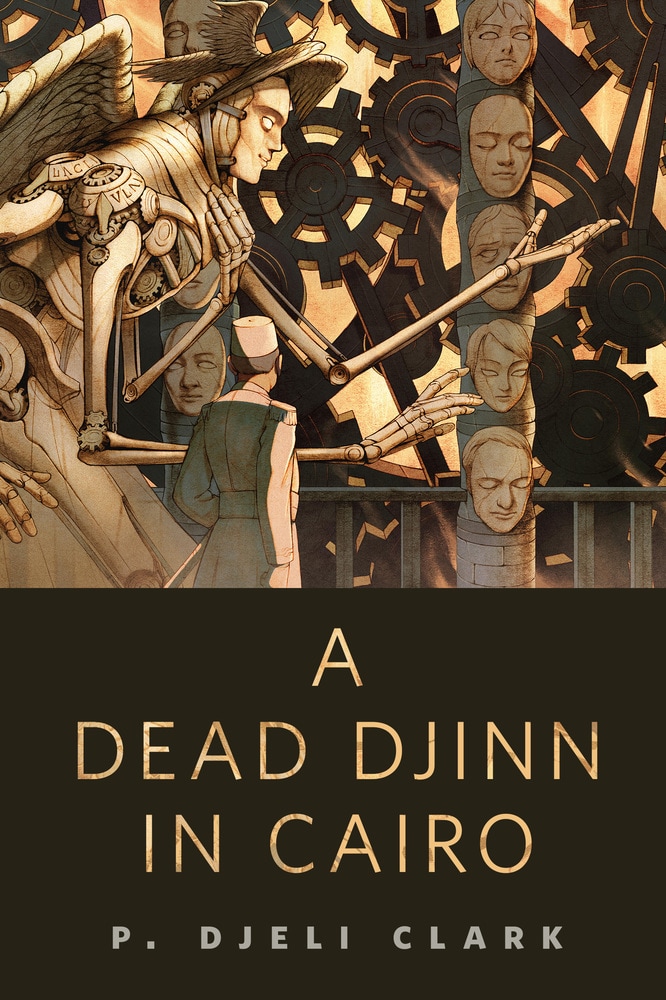
December 16th: A Dead Djinn In Cairo by P. Djèlí Clark

Tell me about your first time:
 My favourite short story of the year because, honestly, how can you not love it? It’s got everything: steampunk Egypt, angels, djinns, ghuls, necromancers, female detectives… it’s just so. damn. awesome.

Sum it up:
 Egypt, 1912. In an alternate Cairo infused with the otherworldly, the Ministry of Alchemy, Enchantments and Supernatural Entities investigate disturbances between the mortal and the (possibly) divine. What starts off as an odd suicide case for Special Investigator Fatma el-Sha’arawi leads her through the city’s underbelly as she encounters rampaging ghouls, saucy assassins, clockwork angels, and a plot that could unravel time itself.

Give me a quote:
 “Unlike djinn, [the angels’] bodies were almost ephemeral, like light become flesh, and required frames to house them. This one towered at least twelve feet, his body a complex construction of iron, steel, and gears that mimicked muscles and bone. Four mechanical arms extended from his bronze armored shoulders, while brilliant platinum wings tinged in traces of crimson and gold lay flat upon his back. It was a wondrous working of machinery that seemed suited for nothing less than immortality.”

Second reading:
 There’s so much worldbuilding in this story, and do you have any idea how hard doing a mystery story and an alternate world is without overloading with exposition? Purely on a technical level, that’s brilliant. It’s also so refreshing to read steampunk that isn’t western-centric; this is suffused in detail, and frequently subverts tropes of steampunk and associated genres (see: the sharp swipe at the exoticism of ‘foreign lands’ that is Fatma’s choice of dress.)

Where can I read it:
 You can read it online at Tor (and it’s also in their Year’s Best). Plus, a new story in the same universe appears in my anthology Clockwork Cairo.
2 Comments

ADVENT CALENDAR '16 / DEC 15TH: WOMAN'S WORK / DAVID BARNETT

6/17/2017

0 Comments

 
It’s back! The blog advent calendar. I enjoyed last year’s blog theme last year—re-reading twenty-four books of my youth—so much, so this year I’m applying the same approach to short stories, trawling through a myriad bunch of collections and anthologies I’ve read in the last few years.

Picture
READ MY FULL REVIEW OF ENCOUNTERS OF SHERLOCK HOLMES
VISIT DAVID BARNETT
December 15th:
Woman’s Work by David Barnett


Tell me about your first time:
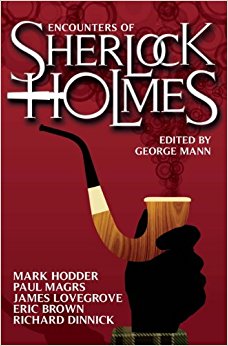
 Before I became a gibbering fanboy for David Barnett’s Gideon Smith series, this was the first time I encountered his work. Both the Encounters and Further Encounters collections (ed. by George Mann) have some excellent Holmes stories in them, in which Holmes it as his usual brilliant best. But in ‘Woman’s Work’ this is not quite the case, which is precisely why it is brilliant.

Sum it up:
 Holmes and Watson, lauded as they are, are in fact… well, completely useless. The real work is done by Mrs Hudson, who follows the clues and arranges things so that her lodger and his companion believe that it is themselves who have solved the crime…

Give me a quote:
 “’Then the game’s afoot!’ said Holmes, laughing delightedly, but to blank looks from the gathering in the parlour. He sighed. ‘It is a game fish, you see. And in length, about twelve inches.’
   ‘Ah, the game is a foot!’ said Watson, clapping his hands. ‘Oh you are clever, Holmes!’”

Second reading:
 Love Holmes as I do, it remains highly entertaining to see such an insipid iteration of him; meanwhile, the erstwhile Mrs Hudson is astute and endearingly down-t-earth – in fact, I would happily read an entire series in which Mrs Hudson solves things whilst Holmes and Watson knock around high on morphine and completely unawares.

I also benefited from having just watched The Blue Carbuncle (yes, I know, I’ve never watched a single of episode of Jeremy Brett and I should be ashamed of myself), which meant that I was particularly fresh on the details of the case. (‘Woman’s Work’ isn’t a direct parallel; more a retelling, which allows a final swipe at the Holmes canon as Mrs Hudson reads Dr. Watson’s far more grandiose version of events.)

Where can I read it:
 You can find it in Encounters of Sherlock Holmes (ed. George Mann.)
0 Comments
<<Previous

    RSS Feed

Proudly powered by Weebly
  • Home
  • Writer
    • Short Fiction
    • Between The Lines
    • Stories To Sing In The Dark
    • Between The Lines
  • Editor
    • The Myriad Carnival
    • Threesome
    • Clockwork Cairo
    • Gents
  • Design
    • Inkspiral Design
    • 20 Minute Design Challenge
  • MIsc.
    • 20 Minute Design Challenge
    • Essays >
      • 'Participation'
    • Reviews
    • Advent Calendar 16: Short Story Re-Reads
    • Advent Calendar 15: Novel Re-Reads
  • Contact